
How to Identify a Genuine Handwoven Turkish Carpet?

17
Temmuz
How to Identify a Genuine Handwoven Turkish Carpet?
Turkish carpets are known worldwide not just for their beauty, but also for the stories they carry—woven by hand, knot by knot. But in a world filled with mass production and imitations, how can you be sure the rug you're buying is a genuine handwoven Turkish carpet?
Whether you're a first-time buyer or a seasoned collector, identifying an authentic piece is both an art and a science. In this guide, we’ll walk you through the most reliable methods to recognize a handwoven Turkish rug—so your investment is not only beautiful, but truly original.
Why Handwoven Turkish Carpets Are So Special
Handwoven carpets from Turkey—especially those from Anatolia—are highly prized for their craftsmanship and cultural heritage. They often feature:
-
Natural vegetable dyes
-
Double-knot (Turkish knot or Gördes knot) techniques
-
Intricate regional motifs
-
Symbolic color use and tribal patterns
-
High durability passed through generations
These carpets are not just home décor—they're functional artworks and historical artifacts.
Key Signs of a Genuine Handwoven Turkish Carpet
1. Check the Back of the Carpet
One of the simplest ways to tell if a carpet is handwoven is by flipping it over. A real handwoven rug will show the design almost as clearly on the back as it does on the front. You’ll also notice:
-
Uneven knotting and weft threads
-
No plastic mesh or rubber backing
-
Clear individual knots, especially in Turkish (symmetrical) style
2. Examine the Edges and Fringe
Hand-tied fringes are another giveaway. Unlike machine-made rugs that often glue or sew on fringe afterward, in handwoven carpets the fringe is an extension of the rug’s warp threads.
Look for:
-
Natural, continuous fringe
-
Slight inconsistencies (a good sign of handmade work)
-
No stitched or glued finish
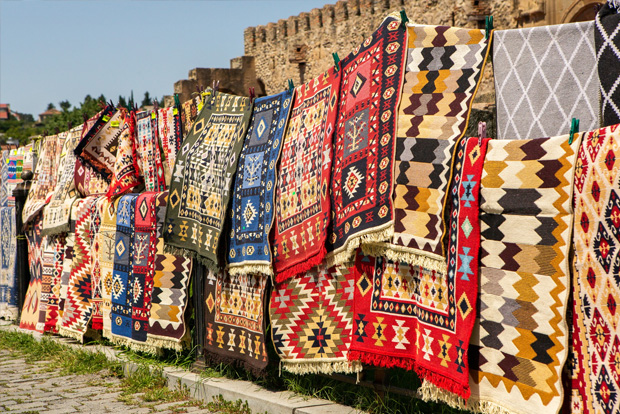
3. Feel the Texture
Genuine handwoven Turkish carpets feel different to the touch. Since they're made with natural wool, cotton, or silk:
-
The texture is slightly coarse but warm
-
The pile may be uneven in older carpets
-
There’s a noticeable flexibility and softness
If it feels too plastic-like or overly rigid, it’s probably machine-made.
Materials Matter: Wool, Cotton, and Silk
Handwoven Turkish rugs are usually made from high-quality hand-spun wool, natural-dyed cotton, or fine silk. You can test the fibers gently by rubbing them or even (carefully) burning a loose end:
-
Natural fibers burn like hair and smell organic
-
Synthetic ones melt and smell chemical
Of course, always ask for material details from the dealer—reputable sellers will be transparent.
The Role of Regional Motifs
Another excellent way to identify a genuine Turkish carpet is by its design. Different regions in Turkey have distinct motifs and weaving styles:
-
Hereke: Silk carpets with floral and palace-inspired designs
-
Yörük: Tribal patterns with bold, geometric shapes
-
Ladik: Medallion-centered designs with tulip motifs
-
Bergama: Deep reds and blues with large geometric layouts
Understanding these regional patterns can help you recognize the rug's origin—and its authenticity.
Ask for a Certificate of Authenticity
A trusted dealer should be able to provide:
-
A written description of the rug
-
Estimated age and origin
-
Knot density and materials used
-
Appraisal or certification
At Tokgun Carpet, we ensure that each piece comes with proper documentation and a detailed explanation of its story and style.
Beware of Common Imitations
Many rugs are marketed as “handmade” or “hand-tufted,” but they are not handwoven. Learn the difference:
| Term | What it Means | Handwoven? |
|---|---|---|
| Hand-tufted | Yarn is punched into a canvas | ❌ |
| Hand-knotted | Individual knots tied manually | ✅ |
| Machine-made | Fully industrial manufacturing | ❌ |
If the price seems too good to be true, it probably is.
Visit a Reputable Showroom in Istanbul
When in doubt, visit a trusted rug dealer—preferably one that specializes in handwoven antiques or regional pieces. In Istanbul’s Sultanahmet district, Tokgun Carpet is one of the most recommended names for authentic Turkish carpets.
We provide:
-
In-store demonstrations of hand-knotting techniques
-
Transparent pricing
-
Free worldwide shipping
-
Heritage pieces with verified authenticity